
Marble Stain vs. Marble Etch: How to Tell the Difference and What to Do
Why Misidentifying the Problem Is the Most Expensive Mistake in Marble Care
Not every mark on marble is the same problem — and treating them as if they are is one of the most common ways marble surfaces get damaged beyond what simple restoration can fix. The two most frequent issues marble owners encounter are stains and etches — and while they can look similar at first glance, they're fundamentally different problems with completely different causes, different treatment approaches, and critically, different consequences if the wrong method is applied. Understanding which one you're looking at before doing anything is the single most important step in marble care.
مش كل علامة على الرخام هي نفس المشكلة — ومعاملتها كأنها كذلك هي من أكثر الطرق الشائعة لتلف أسطح الرخام ما وراء ما يمكن إصلاحه بترميم بسيط. المشكلتان الأكثر تكراراً اللي أصحاب الرخام بيواجهونهم هما البقع والحفر — وبينما ممكن يبدوا متشابهين من النظرة الأولى، هما مشكلتان مختلفتان جذرياً بأسباب مختلفة تماماً ونهج معالجة مختلف وبشكل حرج، عواقب مختلفة إذا طُبقت الطريقة الغلط. فهم أيهما عم تنظر إليه قبل عمل أي شيء هو الخطوة الأهم الوحيدة بالعناية بالرخام.
What a Stain Is — And What Causes It
A stain on marble is a discoloration caused by a substance that has been absorbed into the porous stone. Marble is a natural calcium carbonate material with a micro-porous structure — invisible to the eye but present throughout the stone. When a colored or pigmented liquid contacts unsealed marble and is left for enough time to penetrate the surface, it deposits color into those pores that remains even after the surface is wiped clean. Common staining agents in residential settings include coffee, red wine, cooking oil, rust from metal objects left on marble surfaces, and organic matter from plants or food.
البقعة على الرخام هي تلون ناتج عن مادة امتصّها الحجر المسامي. الرخام مادة كربونات الكالسيوم الطبيعية بتركيب مجهري المسامية — غير مرئي للعين لكن موجود عبر الحجر. لما سائل ملوّن أو مصبوغ يلمس رخاماً غير مختوم ويُترك لوقت كافٍ ليخترق السطح، بيودع لوناً بهيكل المسامات بيبقى حتى بعد مسح السطح. عوامل التلون الشائعة بالبيئات السكنية بتشمل القهوة والنبيذ الأحمر وزيت الطبخ والصدأ من أشياء معدنية متروكة على أسطح الرخام والمواد العضوية من النباتات أو الأكل.
The defining characteristic of a stain is that it doesn't change the texture or reflectivity of the marble surface. A stained marble tile looks discolored but the surface remains smooth and the gloss level across the stained area matches the surrounding stone. Run your fingertip across a stain and the surface feels identical to the area beside it — smooth and even. This texture test is the most reliable way to distinguish a stain from an etch without any specialist equipment.
الخاصية المميزة للبقعة هي إنها ما بتغير ملمس أو انعكاسية سطح الرخام. بلاطة رخام مبقعة تبدو ملونة لكن السطح يبقى ناعماً ومستوى البريق عبر المنطقة المبقعة يطابق الحجر المحيط. مرّر طرف إصبعك على بقعة والسطح بيحس متطابق مع المنطقة بجانبه — ناعم ومتساوٍ. هيكل اختبار الملمس هو أكثر طريقة موثوقة للتمييز بين البقعة والحفر بدون أي معدات متخصصة.
What an Etch Is — And What Causes It
An etch is a completely different type of damage. It's not a stain — it's a chemical reaction between an acidic substance and the calcium carbonate in the marble surface itself. When acid contacts marble, it dissolves the calcium carbonate in the surface layer, leaving a rough, dull patch where the stone's polished crystal structure has been chemically disrupted. The most common sources of acid in domestic settings are lemon juice, vinegar, tomato sauce, wine, carbonated drinks, and many commercial cleaning products — including some labeled as "tile cleaners" or "bathroom cleaners" that contain hydrochloric or phosphoric acid.
الحفر هو نوع مختلف تماماً من الضرر. مش بقعة — هو تفاعل كيميائي بين مادة حمضية وكربونات الكالسيوم بسطح الرخام نفسه. لما الحمض يلمس الرخام، بيذيب كربونات الكالسيوم بالطبقة السطحية، تاركاً بقعة خشنة وباهتة حيث البنية البلورية المصقولة للحجر تعرضت لاضطراب كيميائي. أكثر مصادر الحمض شيوعاً بالبيئات المنزلية هي عصير الليمون والخل وصلصة البندورة والنبيذ والمشروبات الغازية وكتير من منتجات التنظيف التجارية — بما فيها بعض المُسمّاة "منظفات بلاط" أو "منظفات حمام" اللي بتحتوي حمض الهيدروكلوريك أو الفوسفوريك.
The defining characteristic of an etch is exactly what distinguishes it from a stain: it changes the surface texture and light reflectivity. An etched area looks dull compared to surrounding polished marble, and when you run your fingertip across it, the surface feels different — slightly rough, grainy, or chalky compared to the smooth polish around it. The color may or may not have changed, but the surface finish has. This texture change is the definitive diagnostic sign of an etch rather than a stain.
الخاصية المميزة للحفر هي بالضبط ما يميزه عن البقعة: بيغير ملمس السطح وانعكاسية الضوء. منطقة محفورة تبدو باهتة مقارنة بالرخام المصقول المحيط، ولما تمرر طرف إصبعك عليها، السطح بيحس مختلف — خشن قليلاً أو حبيبي أو طباشيري مقارنة بالصقل الناعم حوله. اللون ممكن يتغير أو لا، لكن تشطيب السطح تغير. هيكل التغيير بالملمس هو العلامة التشخيصية القاطعة للحفر بدل البقعة.
Why the Treatment Approach Is Completely Different
Treating a stain correctly requires drawing the staining substance out of the stone's pores — a process called poulticing, where an absorbent material mixed with a chemical agent appropriate for the stain type is applied to the surface, draws the stain out as it dries, and is then removed. Different stain types require different poultice chemicals: organic stains respond to hydrogen peroxide-based poultices, oil-based stains to acetone or mineral spirit-based formulas, and rust stains to iron-specific chelating compounds.
معالجة البقعة بشكل صحيح بتحتاج سحب المادة الملونة من مسامات الحجر — عملية تسمى الضخ، حيث مادة ماصة مخلوطة بعامل كيميائي مناسب لنوع البقعة تُطبق على السطح وتسحب البقعة للخارج لما تجف وبعدين تُشال. أنواع البقع المختلفة بتحتاج كيماويات ضخ مختلفة: البقع العضوية بتستجيب لضمادات قائمة على بيروكسيد الهيدروجين، والبقع القائمة على الزيت لتركيبات قائمة على الأسيتون أو محاللات المعادن، وبقع الصدأ لمركبات خلب الحديد المحددة.
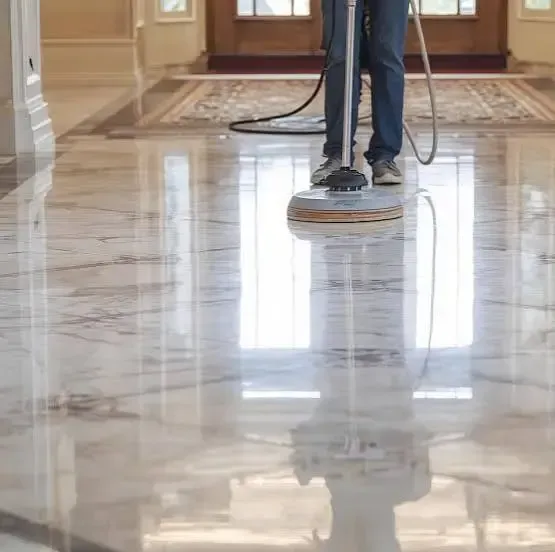
Treating an etch is a fundamentally different process because there's nothing to remove — the damage is the absence of the calcium carbonate layer that was dissolved. Restoration requires physically rebuilding the surface finish through abrasive polishing that removes the damaged layer and re-exposes the smooth, polished crystal structure beneath. This is precisely what marble polishing does: using progressively finer abrasive compounds, the damaged surface layer is ground away to reveal the undamaged stone below, which is then polished back to its original gloss level. No amount of cleaning, stain removal, or surface treatment will fix an etch — the physical surface has been altered and must be physically restored.
معالجة الحفر هي عملية مختلفة جذرياً لأنه ما في شيء لإزالته — الضرر هو غياب طبقة كربونات الكالسيوم اللي ذُيبت. الترميم بيحتاج إعادة بناء تشطيب السطح جسدياً من خلال تلميع كاشط بيشيل الطبقة المتضررة ويُعيد كشف البنية البلورية الناعمة المصقولة تحتها. هيدا بالضبط ما جلي رخام بيعمله: باستخدام مركبات كاشطة أدق تدريجياً، الطبقة السطحية المتضررة تُطحن للكشف عن الحجر غير المتضرر تحتها، اللي بعدين يُلمَّع لمستوى بريقه الأصلي. لا قدر من التنظيف أو إزالة البقع أو معالجة السطح رح يصلح الحفر — السطح الجسدي تغير ولازم يُستعاد جسدياً.
The Misidentification Problem and Its Consequences
The most common mistake in home marble care is applying stain removal products to etches — or worse, using acidic cleaning products on etched marble in an attempt to "clean" what looks like a dull mark. Applying an acidic cleaner to an already etched surface makes the etch deeper and wider with each application. What began as a light surface etch becomes progressively more severe damage, and the threshold at which professional marble polishing and restoration can fully recover the surface decreases with each acidic application.
أكثر غلطة شائعة بالعناية المنزلية بالرخام هي تطبيق منتجات إزالة البقع على الحفر — أو الأسوأ، استخدام منتجات تنظيف حمضية على الرخام المحفور بمحاولة "تنظيف" ما يبدو كعلامة باهتة. تطبيق منظف حمضي على سطح محفور بالفعل بيجعل الحفر أعمق وأوسع مع كل تطبيق. ما بدأ كحفر خفيف للسطح بيصبح ضرراً أكثر حدة تدريجياً، والعتبة اللي عندها professional marble polishing and restoration بيقدر يستعيد السطح بالكامل بتنخفض مع كل تطبيق حمضي.
The second most common mistake is applying oil-based products — including some commercial marble "restorers" and "conditioners" — to etched surfaces in the hope of bringing back the shine. Oil doesn't restore surface gloss on marble. It temporarily fills the rough texture of an etch with a reflective film that makes the etch look better for a day or two and then wears off, leaving the etch unchanged while adding an oil contamination layer to the stone that can complicate subsequent professional restoration.
الغلطة الثانية الأكثر شيوعاً هي تطبيق منتجات قائمة على الزيت — بما فيها بعض "مرممات" و"مكيفات" الرخام التجارية — على الأسطح المحفورة بأمل استعادة البريق. الزيت ما يستعيد البريق السطحي على الرخام. بيملأ مؤقتاً الملمس الخشن للحفر بغشاء عاكس بيجعل الحفر يبدو أفضل ليوم أو يومين وبعدين يتآكل، تاركاً الحفر بدون تغيير بينما يضيف طبقة تلوث زيتية للحجر ممكن تعقّد الترميم الاحترافي اللاحق.
When to Call a Professional
Both stains and etches have a point past which home treatment is either ineffective or counterproductive. Deep stains that have penetrated multiple layers of the stone, or rust stains that have been present for months, typically require professional-grade poultice applications with chemical concentrations that aren't available in retail products. Etches that have been present for a long time or that cover large areas require marble polishing with professional abrasive equipment — the hand-applied polishing compounds sold for home use don't generate the controlled, even pressure across a surface that machine polishing produces, and attempting to polish a large etched area by hand typically creates an uneven sheen that's more visible than the original etch.
كلاً من البقع والحفر عنده نقطة ما بعدها المعالجة المنزلية إما غير فعالة أو عكسية الأثر. البقع العميقة اللي اخترقت طبقات متعددة من الحجر أو بقع الصدأ اللي كانت موجودة لأشهر عادةً بتحتاج تطبيقات ضخ بمستوى احترافي بتركيزات كيميائية غير متاحة بمنتجات التجزئة. الحفر اللي كان موجوداً لوقت طويل أو يغطي مساحات كبيرة يحتاج جلي رخام بمعدات كاشطة احترافية — مركبات التلميع المطبقة باليد المباعة للاستخدام المنزلي ما بتولد الضغط المتساوي والمتحكم به عبر سطح اللي تلميع الآلة بينتجه، ومحاولة تلميع منطقة محفورة كبيرة باليد عادةً بتخلق بريقاً غير متساوٍ أكثر وضوحاً من الحفر الأصلي.
A professional marble polishing assessment begins with exactly this diagnostic process: identifying whether the problem is a stain, an etch, or — as is often the case after years of home treatment attempts — a combination of both. Professional marble polishing and restoration can address both in a single service visit, restoring the surface to a condition that looks and feels as close to the original as the depth of damage allows. The earlier professional attention is sought, the more completely the surface can be recovered — which is the most important reason not to keep trying home remedies that aren't working.
تقييم جلي رخام الاحترافي بيبدأ بالضبط بهيكل العملية التشخيصية: تحديد إذا المشكلة بقعة أو حفر أو — كما هو الحال غالباً بعد سنوات من محاولات المعالجة المنزلية — مزيج من الاثنين. professional marble polishing and restoration بيقدر يعالج كليهما بزيارة خدمة واحدة، مستعيداً السطح لحالة تبدو وتحس بالقرب الأكبر من الأصل اللي عمق الضرر يسمح به. كلما تم البحث عن الاهتمام الاحترافي أبكر، كلما أمكن استعادة السطح بشكل أكمل — وهيدا أهم سبب لعدم الاستمرار بتجربة العلاجات المنزلية اللي ما بتشتغل.
📞 Book your professional marble polishing and restoration assessment today — identify the problem correctly before it becomes permanent.